Skip to articles

Ad Code

Latest Post

AI Will Not Fix an Office That Cannot Find Its Own Records

An organisation has three versions of its staff list, several budgets with similar filenames and important approvals scattered across personal messages. It introduces an AI assistant and asks for a report. The output arrives quickly, written in confident and polished English.

Which records did it use? Which budget was final? Did the staff list include people who had already left? If nobody can answer those questions, the attractive report may simply have hidden the original disorder.

AI can assist with useful tasks. But it also makes an old management problem harder to ignore: an organisation needs to know what information it holds, which version is authoritative and who is responsible for maintaining it.

A fluent answer can conceal an unresolved source problem

NIST's Generative AI Profile identifies confabulation, including confidently presented false content, among the risks organisations need to address. That risk exists even before a tool encounters contradictory or outdated internal records.

An office should therefore distinguish two questions. Is the source material dependable? And has the tool represented it correctly? A human reviewer needs access to the originals to answer the second question, while a clear records process helps answer the first.

Consider a hypothetical budget summary. The reviewer should be able to identify the approved version, check the amounts and see which assumptions remain provisional. If the summary cannot be traced back to a definite document, correcting its sentences will not establish its accuracy.

Start with a small information problem

Before buying another tool, choose a record that repeatedly causes confusion. It might be the current project budget, a staff contact list or the latest approved organisational profile.

Decide where the authoritative copy belongs, who can edit it and who approves changes. Use a naming convention that people understand. Record important revisions and retain earlier versions where needed. Establish access arrangements that support the work without exposing information unnecessarily.

These are ordinary administrative decisions. They can be implemented in a modest shared workspace if the organisation has clear responsibilities and follows them. An expensive system will not compensate for nobody knowing who should update a record.

Give AI a defined assignment

Once the source is controlled, a limited task becomes easier to supervise. A tool might help summarise an approved public report or propose headings for an internal document. The person responsible can compare the result with a known source and check whether the intended meaning survives.

Sensitive records require a separate decision about whether a service is appropriate. The organisation should understand the service's current data handling and retention arrangements before submitting information. Permission to access a file within the office does not automatically imply permission to send it to an outside provider.

Staff also need to know where the tool's responsibility ends. It can suggest text, but an authorised person must make the decision, approve the document or confirm the instruction. The workflow should make that responsibility visible.

Measure the whole task, including correction

Speed is useful when it reduces the time required to produce dependable work. Measure the complete process: preparation, generation, checking, correction and approval. A quick first draft may still require substantial repair.

Keep examples of recurring mistakes so the team can decide whether a task needs a different approach. If a tool repeatedly mishandles tables or confuses provisional and final figures, that is a reason to restrict its use on those tasks until the problem is understood.

The same review may reveal weaknesses unrelated to AI. Perhaps two departments use different definitions, or approval decisions are never recorded. Fixing those problems improves the office even if the tool is eventually abandoned.

Technology should help an organisation work with information it can explain and defend. The first investment may therefore be an agreed folder, a dependable record and a person accountable for keeping it current. Without those foundations, faster writing can simply produce confusion more efficiently.

Sources

Post a Comment

0 Comments

SELECTED CREDENTIALS

Professional learning,
applied in practice.

A carefully selected set of fellowships, professional certificates and technical training across information, technology, communication, research and public policy.

Storytelling with Gender Data Fellowship certificate
Equal Measures 20302025

Storytelling with Gender Data Fellowship

Global fellowship focused on turning gender data into compelling public-interest stories.

Gender data · Storytelling · Policy communication
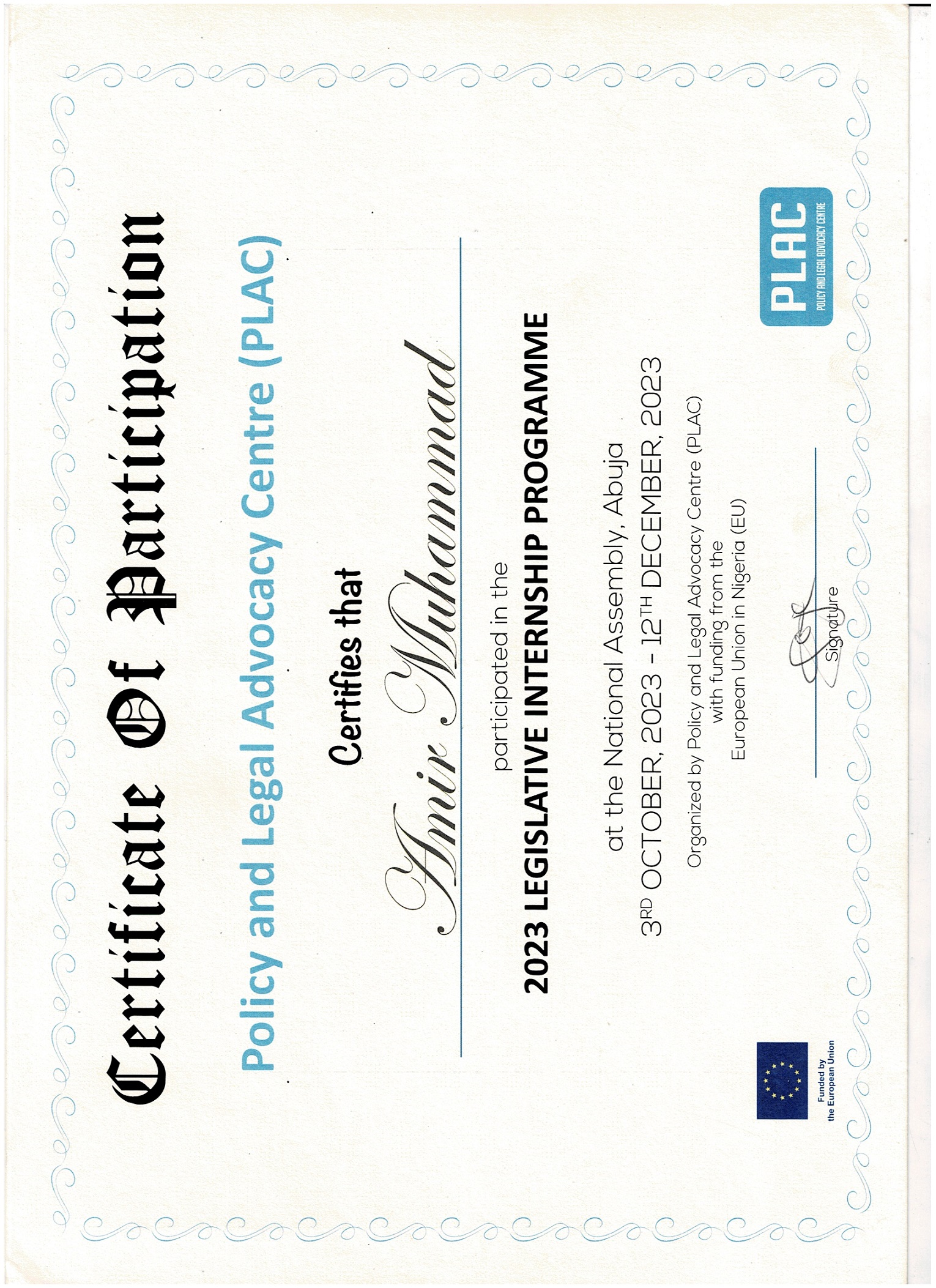
Legislative Internship Fellowship certificate
EU / PLAC2023

Legislative Internship Fellowship

Professional immersion in legislative research, parliamentary processes, policy and advocacy.

Governance · Policy research · Legislative analysis
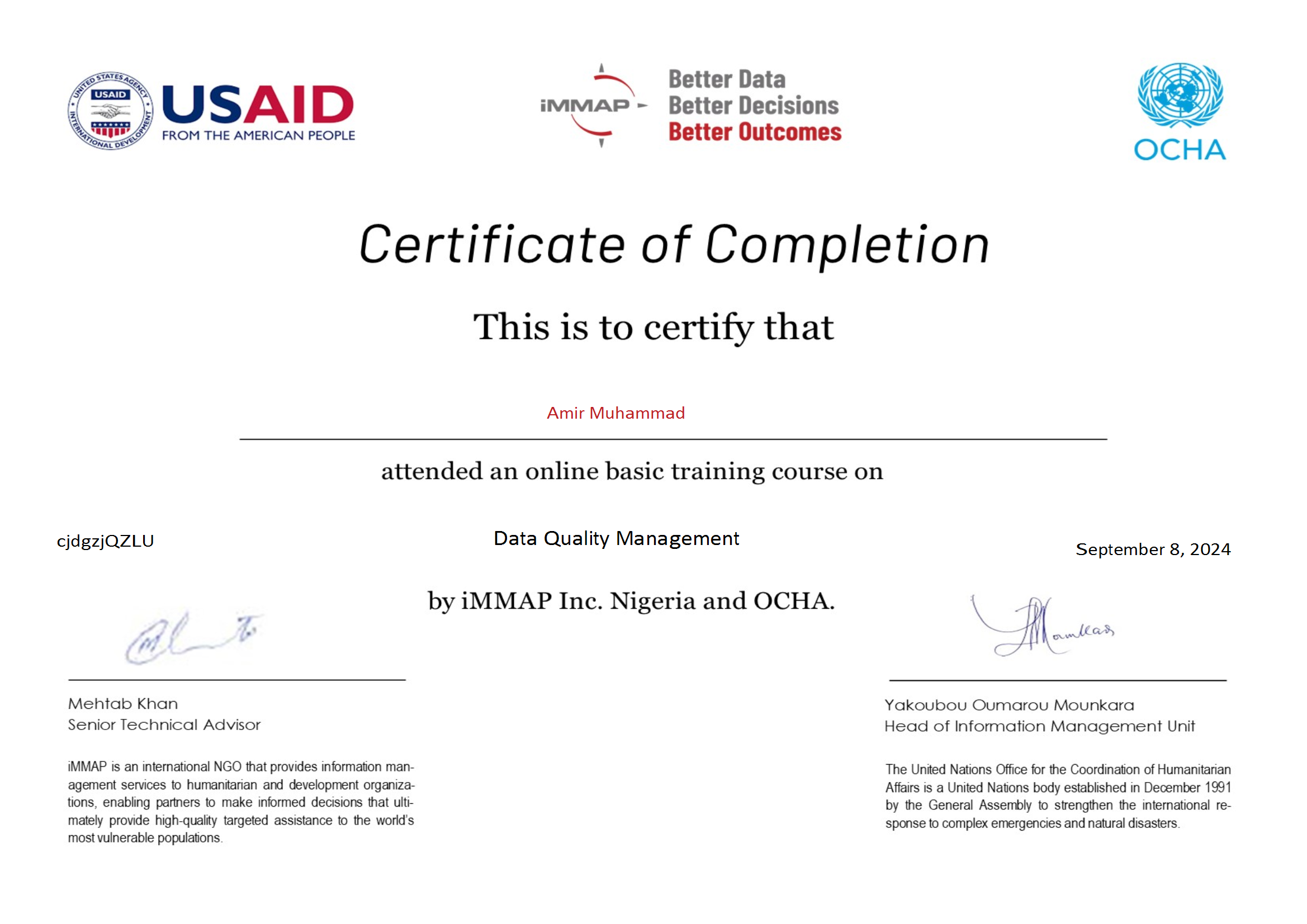
Data Quality Management certificate
iMMAP & OCHA2024

Data Quality Management

Training in data quality, validation, consistency and responsible information management.

Data quality · Information management · Research
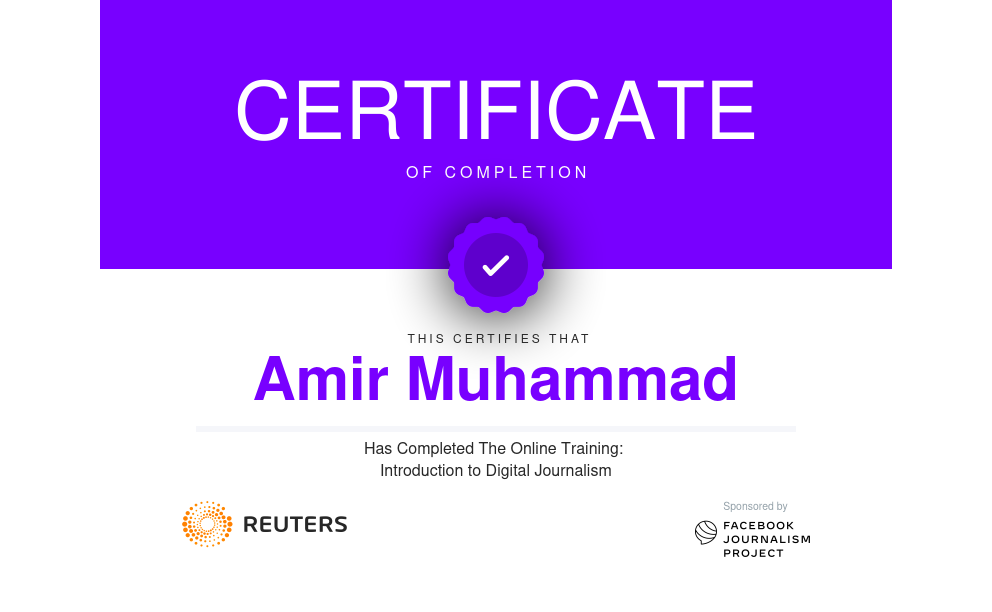
Digital Journalism certificate
Reuters / Facebook Journalism Project2023

Digital Journalism

Digital reporting, verification and audience-focused journalism for modern media environments.

Digital journalism · Verification · Communication
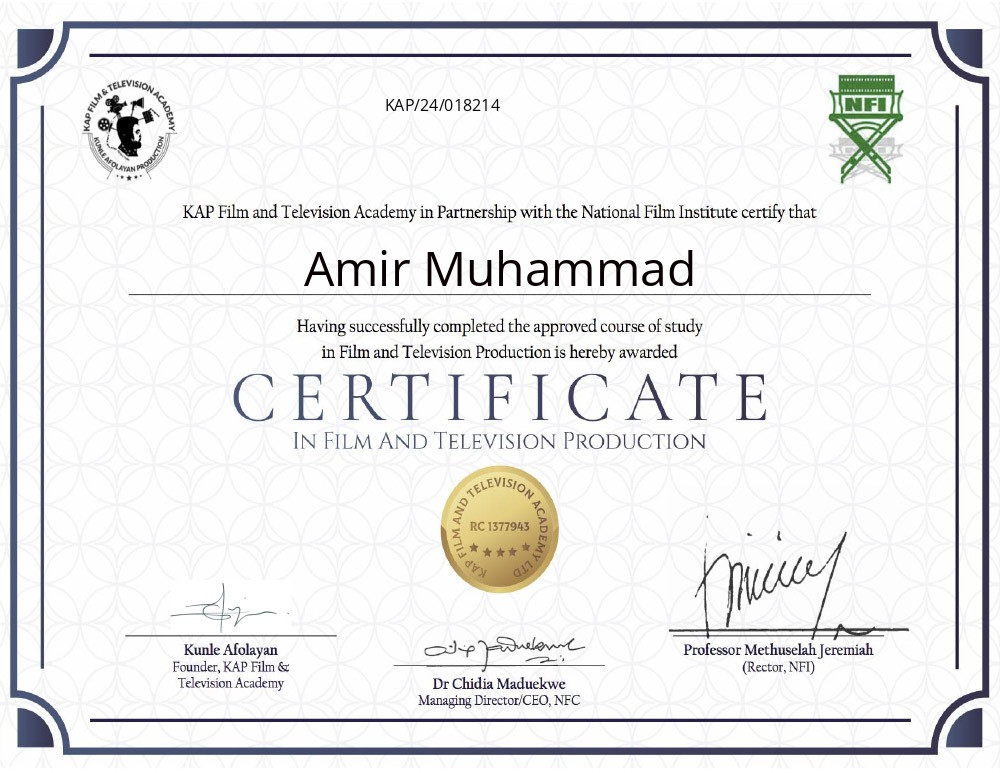
Film & Television Production certificate
KAP Film & Television AcademyProfessional Training

Film & Television Production

Professional training supporting stronger visual storytelling, media production and communication.

Media production · Storytelling · Communication
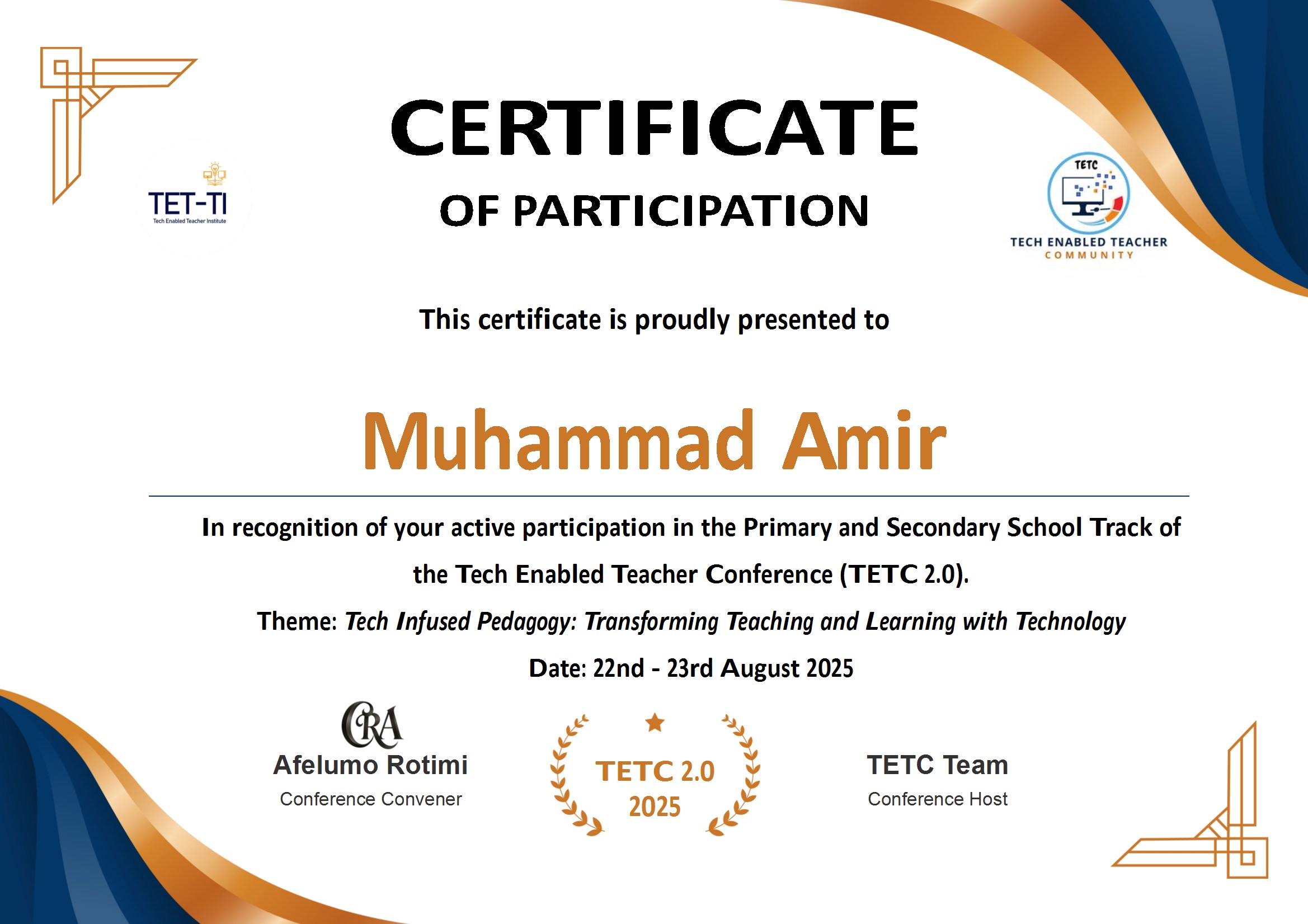
Tech Infused Pedagogy certificate
Tech Enabled Teacher Conference2025

Tech Infused Pedagogy

Professional learning on emerging technology, digital education and technology-enabled teaching.

Technology · Digital education · Innovation
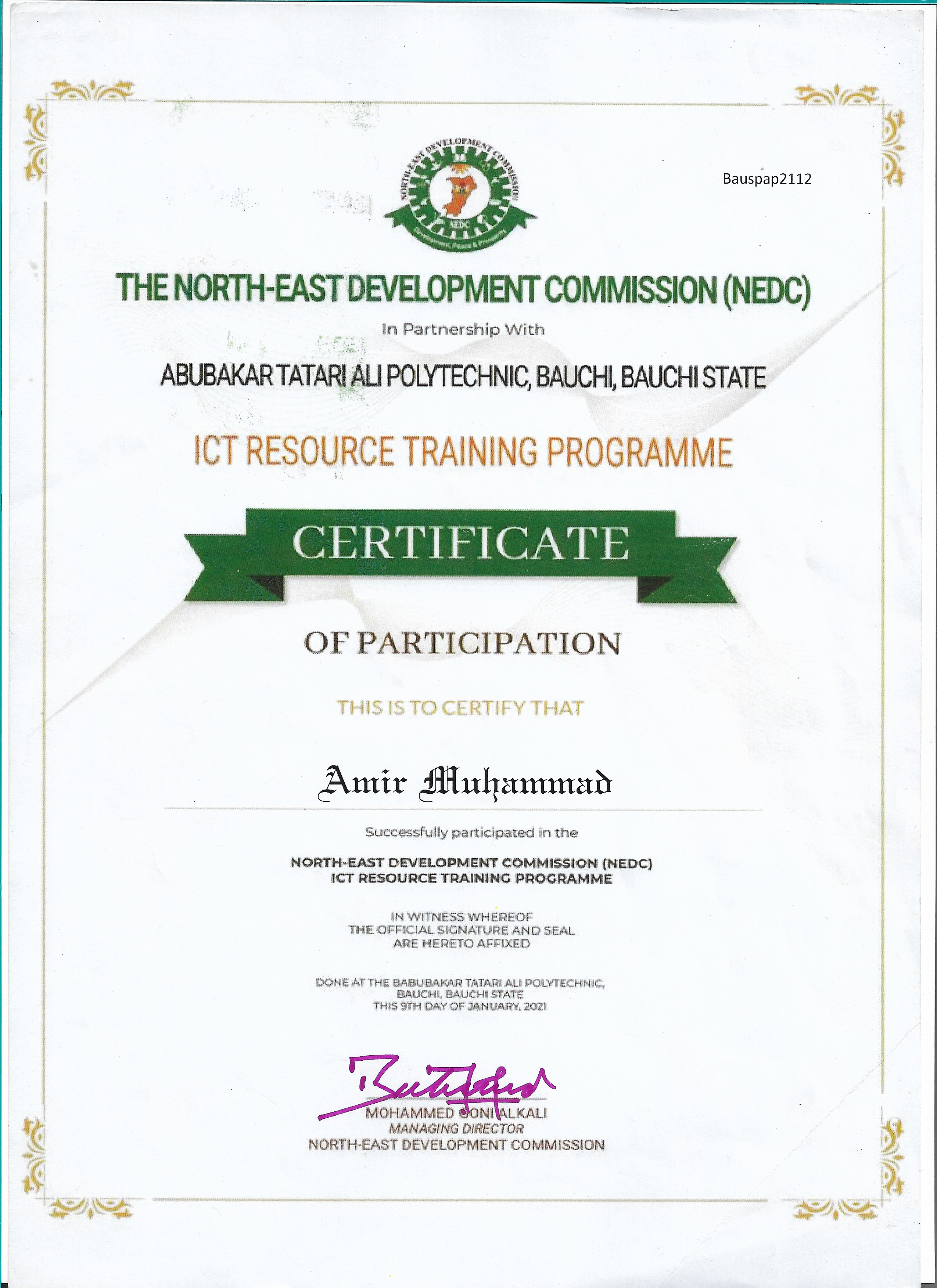
NEDC ICT Resource Training Programme certificate
North East Development Commission2021

ICT Resource Training Programme

Practical ICT training in digital skills and applied technology, strengthening the foundation for information systems and digital work.

ICT · Digital skills · Technology foundations
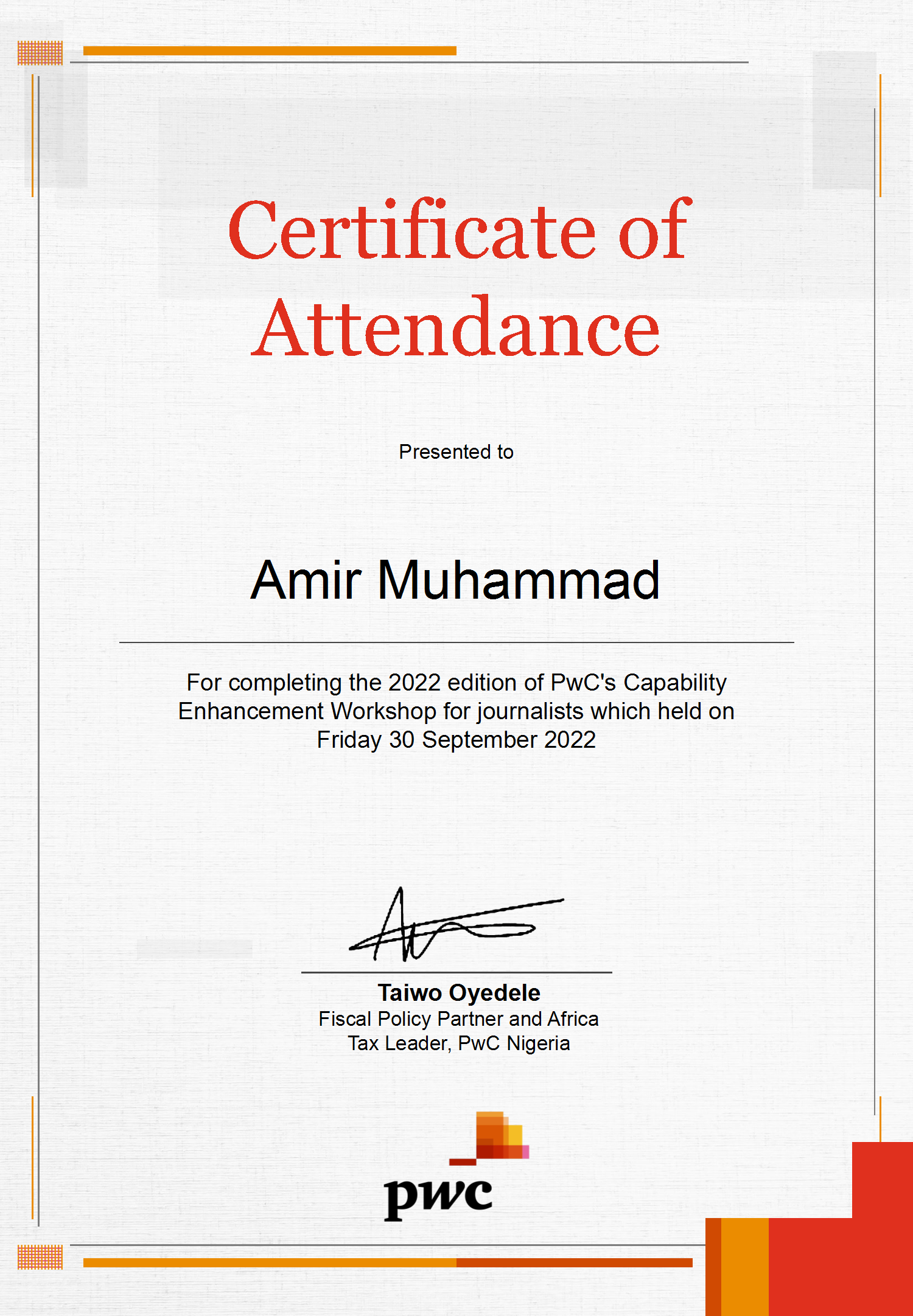
Capability Enhancement Workshop for Journalists certificate
PwC Nigeria2022

Capability Enhancement Workshop for Journalists

Professional development for journalists with emphasis on stronger reporting and professional capability.

Journalism · Professional development · Communication
Storytelling with Gender Data Fellowship certificate
Equal Measures 20302025

Storytelling with Gender Data Fellowship

Global fellowship focused on turning gender data into compelling public-interest stories.

Gender data · Storytelling · Policy communication
Legislative Internship Fellowship certificate
EU / PLAC2023

Legislative Internship Fellowship

Professional immersion in legislative research, parliamentary processes, policy and advocacy.

Governance · Policy research · Legislative analysis
Data Quality Management certificate
iMMAP & OCHA2024

Data Quality Management

Training in data quality, validation, consistency and responsible information management.

Data quality · Information management · Research
Digital Journalism certificate
Reuters / Facebook Journalism Project2023

Digital Journalism

Digital reporting, verification and audience-focused journalism for modern media environments.

Digital journalism · Verification · Communication
Film & Television Production certificate
KAP Film & Television AcademyProfessional Training

Film & Television Production

Professional training supporting stronger visual storytelling, media production and communication.

Media production · Storytelling · Communication
Tech Infused Pedagogy certificate
Tech Enabled Teacher Conference2025

Tech Infused Pedagogy

Professional learning on emerging technology, digital education and technology-enabled teaching.

Technology · Digital education · Innovation
NEDC ICT Resource Training Programme certificate
North East Development Commission2021

ICT Resource Training Programme

Practical ICT training in digital skills and applied technology, strengthening the foundation for information systems and digital work.

ICT · Digital skills · Technology foundations
Capability Enhancement Workshop for Journalists certificate
PwC Nigeria2022

Capability Enhancement Workshop for Journalists

Professional development for journalists with emphasis on stronger reporting and professional capability.

Journalism · Professional development · Communication
Hover to pause the moving credentials strip. Selected credentials only

LET’S CONNECT

Let’s keep the
conversation going.

Have a question, an idea or an opportunity to collaborate?
I’d be glad to hear from you.

Send me an email ↗amirhmuhd@gmail.cominfo@amirharbo.com